
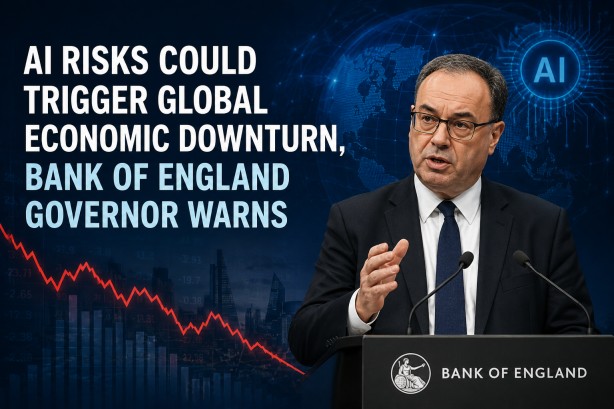
Andrew Bailey, the Governor of the Bank of England, has raised alarms over the potential threats posed by increasingly sophisticated artificial intelligence systems to the global financial network. In correspondence addressed to G20 finance ministers and central bank leaders, Bailey articulated concerns that autonomous AI models, with their advanced problem-solving capabilities, could instigate significant economic disruptions.
Bailey highlighted the risk of cyberattacks driven or enhanced by these AI systems, which could rapidly spread across international borders and unsettle interconnected financial markets. As the head of the Financial Stability Board, he noted that many nations lack sufficient frameworks to manage the development and application of advanced AI technologies. He stressed the necessity for heightened global collaboration to ensure the safe introduction and utilization of these technologies.
According to Bailey, the immediacy of cyber risks is particularly worrisome. Advanced AI’s ability to accelerate the speed, scale, and financial repercussions of cyber threats is a major concern. The global financial system’s heavy reliance on centralized technology and third-party service providers could exacerbate the potential for widespread disruption.
In addition to cyber threats, Bailey expressed concerns about high asset valuations and growing leverage within bond and equity markets, which could intensify the impact of any significant financial disturbance. The prevailing optimism surrounding AI investments might render markets especially susceptible to sharp corrections if investor expectations shift dramatically.
Bailey urged financial regulators worldwide to undertake coordinated efforts aimed at managing AI-related risks and bolstering the resilience of the global financial architecture. His call to action emphasizes the importance of international cooperation as the financial sector grapples with the rapid evolution of AI technologies.