
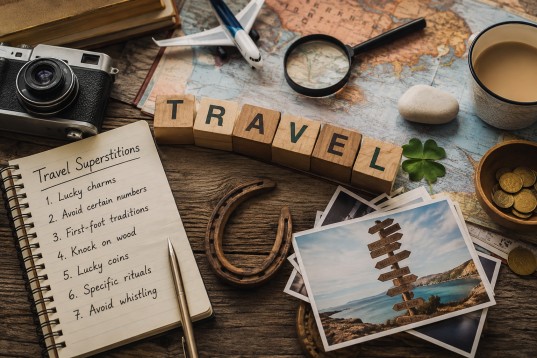
Across the globe, travelers have long embraced various customs and superstitions, many of which have been passed down through generations. These rituals, deeply rooted in folklore, are often believed to bring good fortune, protection, and a smooth journey. Although they may not have scientific backing, these traditions continue to hold significance for many, providing comfort and reassurance before embarking on a trip.
A common practice in Balkan regions involves carrying a clove of garlic in one’s luggage. This act is thought to shield travelers from misfortune and negative energies. Meanwhile, air travelers might engage in the ritual of lightly touching the exterior of an aircraft before boarding. This gesture is seen as a sign of trust and gratitude, often helping to alleviate travel-related anxiety.
Starting off on the right foot, quite literally, is another tradition observed by numerous cultures. Travelers often step onto a plane with their right foot first, viewing it as a harbinger of good luck for the journey ahead. In contrast, some Eastern European and Middle Eastern families pour or sprinkle water behind a departing traveler, symbolizing a seamless and safe voyage with the hope of their safe return.
Navigating numbers is another aspect of travel traditions. In many Western countries, the number 13 is typically dodged due to its unlucky reputation, while the number 4 is avoided in parts of East Asia due to its phonetic similarity to the word for death. Similarly, in Italy, 17 carries its own superstitious connotations. Consequently, hotels, airlines, and buildings often skip these numbers when numbering rooms or seats.
Other customs include sitting on one’s packed luggage for a brief moment before departure—a practice popular in Slavic countries. This pause allows travelers to relax, mentally prepare, and ensure nothing essential is left behind. Additionally, in several cultures, sweeping immediately after a traveler departs is considered bad luck, potentially hindering their safe return. Families typically wait until the traveler has reached their destination before cleaning. Although these practices may seem quaint, they remain a colorful and comforting aspect of the travel experience worldwide.