
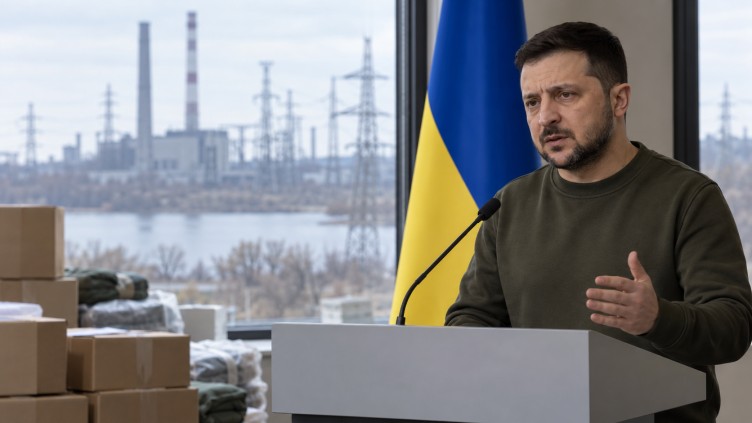
Ukrainian President Volodymyr Zelensky has announced that a proposed energy ceasefire with Russia has collapsed, as Russia continues its attacks on Ukraine’s energy infrastructure. Despite this setback, Zelensky expressed optimism about a separate humanitarian truce in Oleshky, which is currently under Russian occupation. This truce, mediated by the United States, aims to facilitate humanitarian operations and evacuate civilians from the area.
Speaking on October 28 in The Hague alongside Dutch Prime Minister Rob Jetten, Zelensky emphasized that Ukraine had supported the ceasefire proposal put forward by US President Donald Trump, but Russia did not reciprocate. Consequently, Ukraine will continue to defend its energy facilities against Russian assaults. However, he praised the initial success of the humanitarian truce in Oleshky, which began on October 27, and expressed gratitude to Washington for its role in brokering the agreement.
In addition to these developments, Zelensky revealed that Ukraine is preparing for another round of trilateral peace talks involving Ukraine, the United States, and Russia. Scheduled to occur in Abu Dhabi between November 6 and 10, these discussions will address several critical issues, including ceasefire arrangements, energy infrastructure, maritime security, prisoner exchanges, and the return of Ukrainian children.
Zelensky highlighted the importance of technical-level meetings to lay the groundwork for negotiations between national leaders, although no direct meeting is currently planned with Russian President Vladimir Putin. He stressed that Ukraine is willing to discuss territorial matters directly with Russia but insisted that any agreement affecting Ukraine must include its participation.
The Ukrainian president also underscored the necessity of involving European countries in discussions concerning Ukraine’s security guarantees and Europe’s broader security framework. Despite the absence of European representatives in the initial meetings, Zelensky affirmed Ukraine’s commitment to pursuing peace talks.
During his visit, the Netherlands announced a substantial support package for Ukraine, including €500 million in military assistance and €1.2 billion in non-military aid over three years. Prime Minister Jetten stated that the Dutch government is collaborating with international partners to secure additional air-defense interceptors for Ukraine, enhancing its defenses ahead of another winter of potential Russian attacks.