
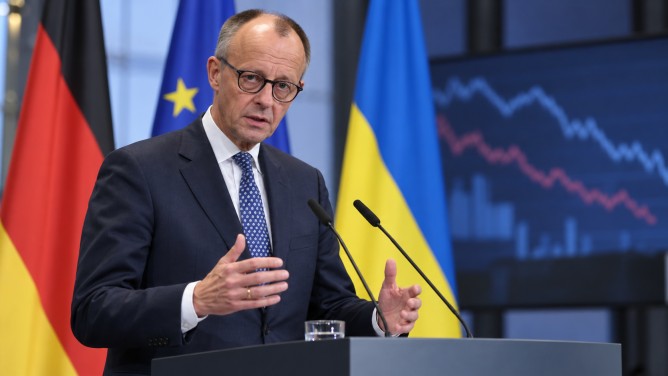
Amidst growing economic challenges, German Chancellor Friedrich Merz has urged the European Union to boost financial aid for Ukraine as the nation grapples with a projected budget shortfall in 2027. This call for increased support comes as EU leaders convene in Brussels to discuss strategies for aiding Ukraine, which is facing intensified Russian aggression and a looming difficult winter.
At the EU summit, Merz emphasized the urgency of continued assistance, asserting that European nations must exert every effort to sustain Ukraine through the upcoming winter and beyond. Despite the EU’s provision of a €90 billion loan intended to support Ukraine through the end of 2027, Ukrainian officials have indicated that their financial needs far exceed this amount, necessitating additional tens of billions of euros in support.
The European Commission is currently collaborating with Kyiv to assess the precise funding requirements for the coming year. Meanwhile, ongoing Russian attacks have inflicted further damage on Ukraine’s economy, exacerbating concerns about its financial stability.
In addition to exploring new funding avenues, EU leaders have revisited discussions on potentially utilizing approximately €200 billion in frozen Russian central bank assets to finance Ukraine’s needs. However, this proposal faces hurdles, particularly from Belgium, which holds the majority of these assets.
Chancellor Merz has dismissed suggestions of transferring some of these frozen assets to the United States as part of peace negotiations with Russia, insisting that such decisions should remain under European jurisdiction.
Ukrainian President Volodymyr Zelensky is set to meet with European leaders to advocate for additional support as Ukraine confronts escalating military and economic pressures. The discussions are expected to focus on securing the necessary funding to bolster Ukraine’s economy and sustain its defense efforts against Russian forces.