
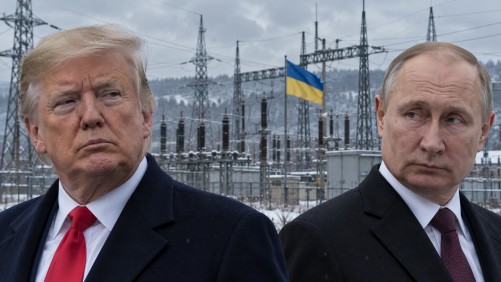
As winter approaches, there is growing concern about the ongoing attacks on energy infrastructure between Ukraine and Russia. US President Donald Trump has expressed skepticism about Russian President Vladimir Putin’s willingness to agree to a mutual ceasefire aimed at halting these attacks before the colder months set in. The United States has been actively encouraging both Kyiv and Moscow to cease hostilities targeting each other’s energy facilities as part of larger peace negotiation efforts.
President Trump has urged Ukraine to stop its attacks on Russian energy infrastructure, a move that Ukrainian President Volodymyr Zelensky has shown support for, indicating Kyiv’s readiness to back an energy ceasefire. While Russia has responded positively to the ceasefire proposal, it has yet to formally commit to a reciprocal pause in attacks.
Despite Trump’s doubts, his negotiating team remains more hopeful following recent talks with Russian officials. US representatives Steve Witkoff and Jared Kushner have returned from Moscow with the belief that an agreement on halting attacks on energy infrastructure could be feasible. Such an arrangement would aim to temporarily stop attacks on power plants and related facilities on both sides, offering Ukraine a chance to safeguard its energy system ahead of winter and serving as a potential confidence-building measure in broader peace discussions.
In addition to the proposed energy truce, the United States is also exploring the possibility of discussions involving Ukraine, Russia, and the US. These talks could address issues like the reopening of a Black Sea grain corridor, alongside the energy ceasefire, as part of efforts to advance the peace process.