
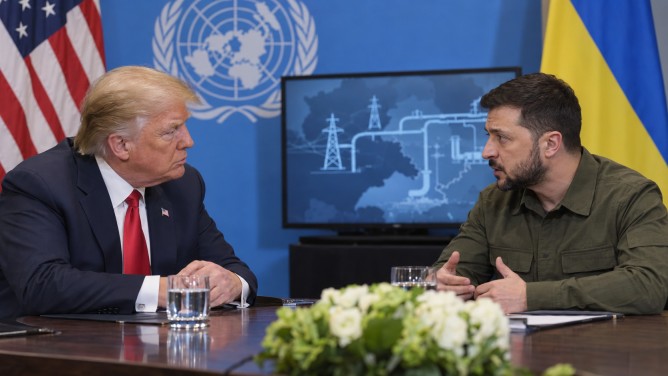
The ongoing conflict between Russia and Ukraine is exerting significant pressure on global energy markets, prompting diplomatic interventions at high-profile international gatherings. As the United Nations General Assembly convenes in New York, discussions will include a meeting between U.S. President Donald Trump and Ukrainian President Volodymyr Zelenskyy, focusing on potential ceasefire agreements concerning energy infrastructure.
Over the weekend, Ukrainian forces intensified their offensive against Russian energy targets, reportedly striking a major oil refinery in the Moscow region, an attack that resulted in three fatalities. These actions have heightened concerns about energy supply disruptions, with President Trump urging Zelenskyy to consider a ceasefire to mitigate global shortages.
President Trump has publicly stated that the assaults on Russian refineries contribute to the current global energy crisis. He emphasized that the prolonged Russia-Ukraine war is a key factor affecting energy supplies worldwide. Despite previous assertions by Trump that both nations had agreed to an energy ceasefire, no formal accord has been reached, with Russian attacks on Ukrainian critical infrastructure persisting.
In response, President Zelenskyy has indicated that negotiations are ongoing, with various proposals under consideration to ease tensions. He has called for an end to Russian strikes on Ukraine’s energy facilities and vital infrastructure, emphasizing that Kyiv is willing to engage in reciprocal de-escalation measures.
The upcoming meeting in New York is not the first interaction between Trump and Zelenskyy on this issue. The two leaders discussed the energy crisis during a phone call on Sunday, where Trump reiterated his stance against targeting Russian diesel and fuel infrastructure. As Trump prepares to address the UN General Assembly, energy discussions are expected to dominate his agenda, paralleling global efforts to resolve the conflict and stabilize energy markets.