
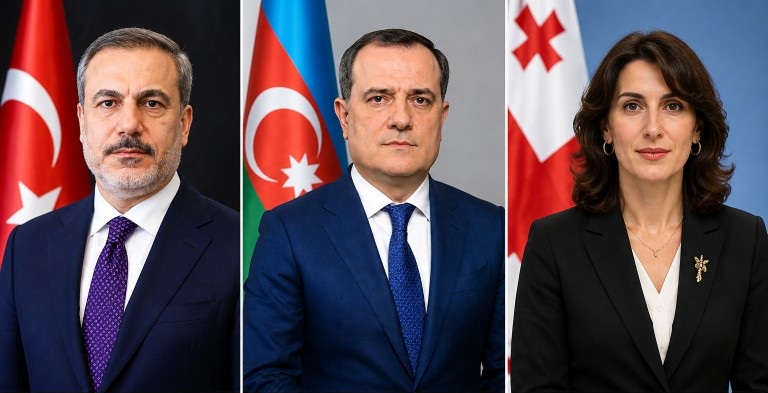
The foreign ministers of Türkiye, Azerbaijan, and Georgia have convened in Istanbul for their 10th trilateral ministerial meeting. This gathering is aimed at bolstering regional cooperation and tackling significant geopolitical and economic issues. The agenda includes enhancing collaboration in key areas such as transportation, connectivity, energy security, trade, and regional stability. Discussions will also cover developments in the South Caucasus and other international matters impacting the region.
A focal point of the meeting is the Middle Corridor, a vital trade route that links Asia and Europe through Central Asia, the Caspian Sea, the South Caucasus, and Türkiye. This corridor has become increasingly crucial as nations seek alternative supply chains and transport pathways amid global geopolitical uncertainties. The ministers will likely emphasize the significance of the Baku-Tbilisi-Kars railway, a pivotal link between Europe and Asia. This railway, alongside regional energy projects, has enhanced economic integration and connectivity among Türkiye, Azerbaijan, and Georgia.
Energy cooperation is another major topic on the table, with leaders underscoring the importance of existing oil and gas infrastructure while exploring new avenues to boost regional energy security. These discussions come at a time of heightened regional tensions, with ongoing conflicts affecting neighboring areas. The officials are expected to underline the necessity of maintaining peace, stability, and economic collaboration in the South Caucasus, while also supporting diplomatic efforts to resolve regional disputes.
The trilateral format, initiated in 2012, has become a crucial platform for fostering cooperation and advancing strategic projects that link Europe and Asia via the South Caucasus. This meeting marks another step in strengthening the ties among the three countries and addressing the geopolitical challenges they collectively face. By focusing on strategic infrastructure and energy projects, the nations aim to solidify their roles in the increasingly important Middle Corridor and contribute to broader regional stability.