
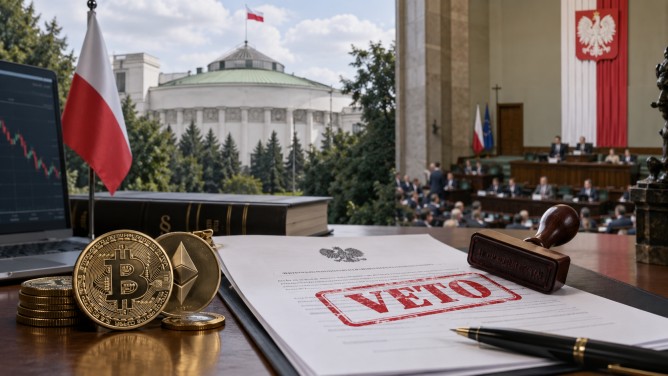
In a recent parliamentary session, Poland’s legislative body, the Sejm, was unable to overturn President Karol Nawrocki’s veto concerning a proposed bill aimed at regulating the nation’s crypto asset market. This marks the third time the legislature has attempted to advance the bill, only to be met with presidential resistance. During the Friday vote, 442 members of parliament cast their ballots. Out of these, 241 supported rejecting the president’s veto, while 198 opposed, and three chose to abstain. However, the effort fell short of the three-fifths majority needed to counter the president’s decision.
President Nawrocki has consistently withheld his approval on this particular piece of legislation, having previously vetoed it twice, once in December 2025 and again in February 2026. His primary contention lies in the bill’s inability to address specific concerns raised by his office. He has emphasized the need for substantial revisions to the bill before he can consider endorsing it, suggesting that the current draft does not satisfactorily resolve the issues at hand.
The core of Nawrocki’s objections centers around the belief that the proposed regulations are insufficient in their current state. The president has made it clear that he is open to signing the bill into law, but only if the necessary amendments are made to rectify what he perceives as shortcomings in its provisions. This stance leaves the future of crypto market regulation in Poland uncertain, as legislative proponents now face the challenge of reworking the bill to meet the president’s conditions.
With this latest vote, the impasse over the crypto regulation bill continues, maintaining a status quo that leaves Poland without updated legislative guidelines for its burgeoning crypto industry. Unless lawmakers return with a revised version that satisfies the president’s criteria, the initiative remains stalled. This ongoing legislative struggle highlights the complexities involved in balancing regulatory frameworks with the dynamic and rapidly evolving crypto sector.