
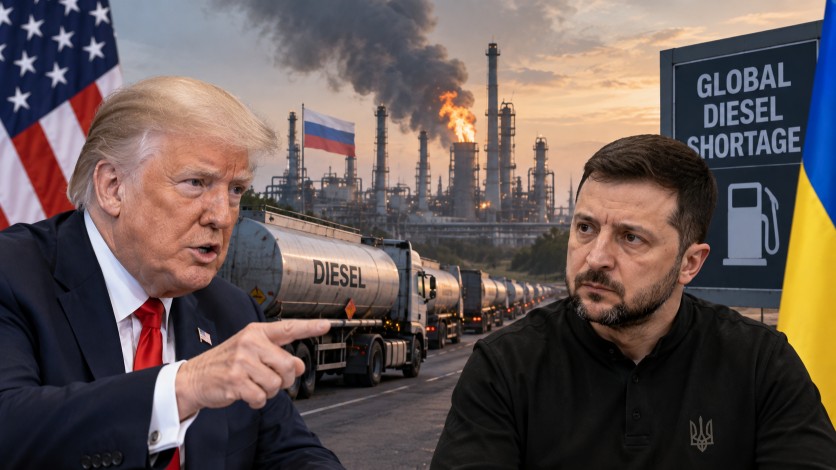
Amidst soaring diesel prices in the United States, exceeding $6 per gallon, President Donald Trump has urged Ukrainian President Volodymyr Zelenskyy to halt assaults on Russian oil refineries and distribution facilities. Trump argues that these attacks are exacerbating a global fuel shortage. While urging Ukraine to focus its military efforts elsewhere, Trump highlights the critical need to stabilize diesel supplies as prices hit unprecedented levels.
Ukraine has been intensifying its focus on Russia’s oil and gas sectors, employing long-range strikes that disrupt refining operations, contributing to fuel shortages within Russia itself. This situation is compounded by Moscow’s decision to limit diesel exports, further tightening the fuel supply in the global market. As the energy crisis unfolds, the Ukrainian government maintains that targeting Russia’s energy infrastructure is vital, as it financially supports Moscow’s military activities in Ukraine.
Additionally, the global diesel shortage is aggravated by disruptions in oil shipments through the Strait of Hormuz, a consequence of the ongoing conflict involving Iran. The International Energy Agency reports that diesel and gasoil exports from Gulf nations plummeted to just over a quarter of their pre-conflict levels as of August. These combined factors paint a troubling picture for global energy markets, raising alarms internationally.
Concurrently, the conflict between Russia and Ukraine continues to escalate, with Moscow launching intensified attacks on Ukrainian cities and infrastructure, including overnight strikes on Odesa. Ukrainian officials have reported casualties and significant damage to both civilian and energy infrastructure. The conflict has also seen an exchange of drone attacks over the weekend, with Ukrainian forces targeting Russian industrial areas and Russia retaliating with strikes on Ukrainian residential and strategic sites.
As the United States approaches the November midterm elections, the impact of rising fuel prices is becoming a significant concern. Trump’s call for Ukraine to reduce its attacks on Russian energy facilities underscores the growing unease over the war’s ripple effects on global fuel supply. The intersection of geopolitical tensions and energy economics is drawing increased scrutiny from policymakers and the public alike, as efforts to address these challenges continue.