
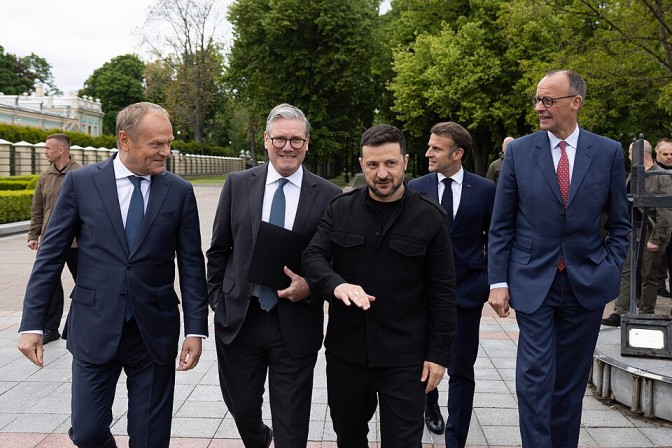
British Prime Minister Keir Starmer’s resignation has sparked a wave of reactions from European leaders, leading to the postponement of a much-anticipated EU-UK summit. Starmer, who has been acknowledged for his contributions to enhancing UK-Europe relations, particularly in the areas of security and support for Ukraine, received commendations from key European figures. Ursula von der Leyen highlighted Starmer’s role in bolstering European and Ukrainian security, emphasizing that his leadership had facilitated improved cooperation.
António Costa, the European Council President, expressed hope that Starmer’s successor would maintain the momentum in rebuilding stronger ties between the EU and the UK. The EU-UK summit, originally scheduled for July 22, was to address crucial topics such as trade agreements, youth mobility, and climate policy collaboration. Despite the political upheaval in Britain, officials remain committed to advancing the relationship between the two entities.
Ukrainian President Volodymyr Zelenskyy also applauded Starmer’s efforts, noting that their collaboration significantly contributed to enhancing European security. Germany echoed these sentiments, describing Starmer as a trustworthy ally, especially regarding foreign policy and Ukraine-related matters. His resignation has resonated on a global scale, drawing varied responses from international leaders.
Former U.S. President Donald Trump extended his well wishes to Starmer but was critical of his policies on immigration, energy, and international affairs. In contrast, leaders from Australia and Norway offered their support and acknowledged the inherent challenges associated with political leadership. The political transition in the UK is closely watched, with global leaders weighing in on its potential impact on international relations.