
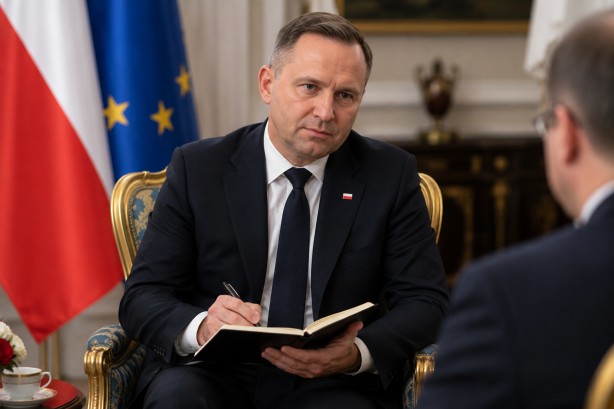
At a recent gathering at the presidential residence in Klarysew, Polish President Karol Nawrocki faced criticism for his conduct during discussions with academics, artists, and media figures. His practice of bringing a notebook, taking notes, and actively engaging with questions during the meeting was highlighted unfavorably in some reports. This portrayal has led to a backlash, with many online commentators and Polish officials dismissing the critique as an exaggerated response to what they consider standard meeting preparation.
Since assuming office, President Nawrocki has frequently engaged with members of the academic and cultural sectors. His administration has notably been involved in appointing numerous professors, with a significant batch of 111 appointments occurring in July alone. This involvement underscores his administration’s active role in shaping Poland’s academic landscape.
The incident has sparked broader discussions about the president’s rapport with Poland’s intellectual and scholarly communities. Some observers view the criticisms of Nawrocki’s meeting habits as indicative of a tense relationship between his administration and certain media outlets, which continue to scrutinize his public engagements.
Debate continues over whether the media portrayal of Nawrocki’s actions reflects a deeper issue in covering the activities of public officials. While some see the criticism as justified, others argue that it represents a misunderstanding of the president’s efforts to engage thoroughly and thoughtfully with various sectors of society.
As discussions around President Nawrocki’s interactions with the academic and intellectual community unfold, the conversation also touches on broader themes of media responsibility and the nature of public discourse in Poland. The president’s supporters emphasize his commitment to fostering dialogue and collaboration, while critics remain wary of his approach and its implications for the country’s cultural and scholarly future.