
Hormonal balance represents one of the most delicate and critical aspects of human health. Hormones regulate everything from energy levels and mood to reproductive function and metabolic rate. Visceral fat—the type indicated by a hard belly—actively disrupts this hormonal balance in multiple ways that subcutaneous fat simply doesn’t.
The mechanism begins with understanding visceral fat as more than passive storage. This tissue functions as an active endocrine organ, secreting various hormones and hormone-like substances. It produces excess estrogen through aromatase enzyme activity, which can disrupt the delicate balance between estrogen and other sex hormones. This is particularly problematic for men, where elevated estrogen relative to testosterone can impair metabolic health, reduce muscle mass, and contribute to further fat accumulation.
Visceral fat also secretes cortisol and promotes systemic cortisol elevation. This stress hormone, when chronically elevated, drives further visceral fat accumulation while simultaneously breaking down muscle tissue, impairing immune function, and disrupting sleep quality. The result is a vicious cycle where visceral fat promotes hormonal imbalances that then drive additional visceral fat accumulation.
Additionally, visceral adipose tissue secretes inflammatory cytokines and adipokines that interfere with leptin signaling. Leptin is the satiety hormone that signals your brain when you’ve consumed adequate energy. When leptin resistance develops, your brain no longer receives accurate hunger signals, promoting overeating despite adequate or excessive energy stores. This creates another self-reinforcing cycle of weight gain and metabolic dysfunction.
Insulin itself functions as a hormone, and visceral fat’s promotion of insulin resistance creates profound hormonal disruption. Elevated insulin levels promote fat storage, impair fat breakdown, and drive hunger and cravings. Breaking these interconnected hormonal cycles requires addressing the root cause: visceral fat accumulation. Sustainable lifestyle changes—protein-rich nutrition, consistent physical activity, and adequate sleep—simultaneously reduce visceral fat stores while supporting hormonal balance through multiple mechanisms.
Breaking Down the Belly: The Internal Fat Wreaking Havoc on Your Hormones
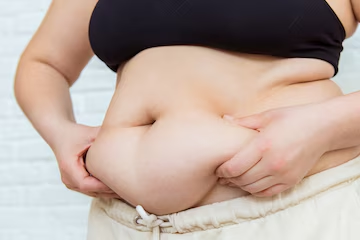
Picture Credit: www.freepik.com
79