
The UK government’s ambitious plan to modernise the steel industry is under threat from its own spending. Business Secretary Peter Kyle confirmed “hundreds of millions” of the £2.5bn fund set aside for the industry has already been used to keep British Steel and Liberty Steel solvent, leaving less for the actual modernisation.
This fund, a 2024 election pledge, was earmarked for capital investment, such as the transition to cleaner electric arc furnaces (EAFs) that Kyle himself is now championing for the Scunthorpe plant. The revelation that it’s being used for emergency operational costs complicates that very transition.
“Using up the money set aside for the steel industry would probably mean less money for capital investment,” the original report notes. Despite this, Kyle remains publicly optimistic, stating he believes EAFs will be built at the state-controlled site.
This financial squeeze comes at the worst possible time. The government is not only trying to fund the EAFs but is also considering an even more expensive investment in a Direct Reduced Iron (DRI) facility. This is seen as necessary to preserve the “primary steelmaking” capability that unions are demanding.
The entire strategy, set to be unveiled in December, is being developed as the global steel market faces a “slew of crises,” including tariffs and oversupply. The depleted fund means the government has far less firepower to navigate these challenges.
UK’s £2.5bn Steel Fund Drained by Bailouts, Threatening Modernisation Plans
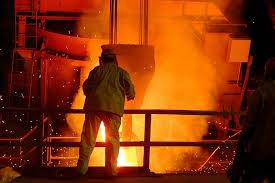
Picture credit: www.rawpixel.com
62